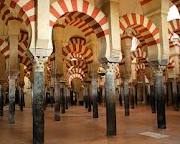
The Franks
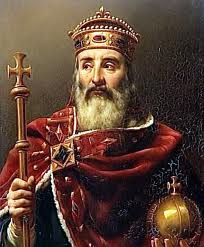
Charlemagne
Christianity
Christianity was the most popular religion in Europe. Many people became monks. A monk known as St. Benedict created a series of rules on how to live as a monk. Monks had to pass many tests in order to become a monk. Monks also had to take many vows and had a strict lifestyle.
Many kingdoms during the Middle Ages sought to spread Christianity through missionaries and monks. One famous monk that led a mission was St. Patrick, who converted Ireland. King Gregory I sent Christianity to England. St. Boniface converted the Germans by combining Christianity with their native religion.
There were several main Christian teachings. The main beliefs are that God is the only god, and the evil spirit opposed to him is the devil. To go to heaven, one much seek salvation by going to Church and through faith. They must have faith in Christ and observe the sacraments. If one did not do these things, they would go to hell, a fiery pit of eternal pain and suffering.
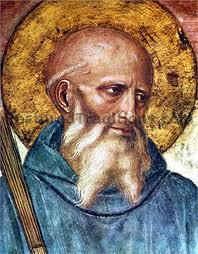
St. Benedict
Europe suffered from constant attacks during the Middle Ages. Therefore, they had to rely on local landlords for protection. Feudalism emerged from this. A lord would grant land to a vassal, or a loyal follower. In return, the vassal pledges his loyalty and will supply knights to the lord in times of trouble. Knights had to follow chivalry, or a Christian warrior's code of behavior. People known as serfs had to farm the lord's land, and could buy their freedom if they had enough money.
With feudalism came manorialism, where lords lived in manors. Manors were usually self-sufficient and could survive on its own. There were farms, churches, workshops, mills, a castle, and many other buildings in the manor.
The Norman Conquest
Normandy led an invasion on England in 1066, led by William the Conqueror. He led an army and took over the capital of England. He was soon crowned the king of England.
The Magna Carta
King John, a descendant of William the Conqueror, claimed to rule Normandy in France. However, he lost a lot of his lands in France. To get them back, he had to create a large army and heavily taxed the people. Eventually, a group of nobles forced King John to sign the Magna Carta, a document that stated that kings could not create taxes without a group of baron's permission. It also stated that no one was above the law and recognized the right of trial by jury.
The Crusades
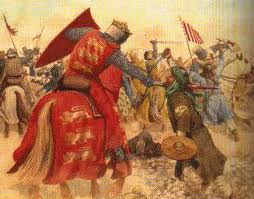
From the late 1000's to the early 1300's, the pope launched a series of crusades, or holy wars. The first one was the most successful and was supposed to free the Holy Land from the Muslims. There were three more crusades, but none were as successful as the first. The second crusade tried to retake a state tried to retake the state of Edessa, but failed to do so. The third was defeated by a powerful Muslim enemy called Saladin. The last crusade was the worst. The people stormed and sacked the city of Constantinople. They were never forgiven by the Byzantines.
The Spanish Muslims
A survivor of the Umayyad rulers had fled to Spain after the rest of them were killed. It established a new kingdom known as Cordoba. The Muslims living there were known as Moors. Cordoba became one of the most advanced civilizations during the Middle Ages. It had an extremely diverse culture and had a lot of trade. The kingdom was very wealthy and comfortable to live in. There were several very large libraries in Cordoba, and learning was greatly encouraged.
The Moorish kingdom came to an end during the Reconquista. Several Christian kingdoms fought to take over Cordoba. Eventually, the kingdom came to an end when the city of Granada fell. During that time, Ferdinand of Aragon and Isabella married to create the country of Spain.