The Beginnings of Islam
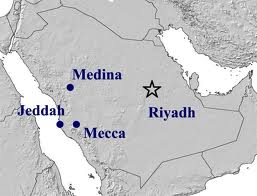
Islam is one of the largest religions today. It originated on the Arabian Peninsula, a dry, harsh place. In the city of Mecca, a man named Mohammad was born. When he grew older, he had a vision in a dark cave where God's angel, Gabriel came to him and told him to spread God's word. Muhammad then began to preach on the streets in Mecca. He began to gain supporters.
However, many people began to persecute Muhammad and his followers. They soon fled north to the city of Medina, where they continued to receive followers. After several years, Muhammad returned to Mecca with an army and took over the city. He declared Islam as the official religion of Arabia.
Islamic Beliefs
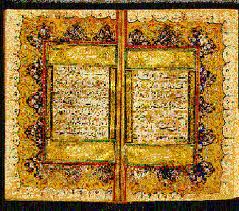
Just like Christianity and Judaism, Islam also has its own Holy Book. They have the Qur'an, which is the "word of God" to Muslims. It contains the revelations Muhammad had during his lifetime and addresses many moral, legal, and family issues. Besides the Qur'an, another key source of Islamic thought is the Sunnah. The Sunnah is a collection of records about Muhammad's thoughts and actions based off of people who knew him.
Islam has several core beliefs that make up the basis of Islamic life. The first and most important belief is that Allah is the one and only God, and his prophet is Muhammad. Another of these beliefs is that everyone has an eternal soul. Their actions during their lifetime will affect whether they go to heaven or hell.
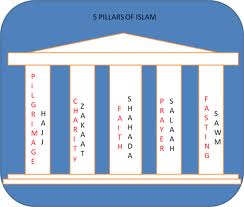
Muslims have 5 important religious duties, known as the 5 pillars. The first pillar is a declaration of faith that Allah is the only God and that Muhammad is his prophet. The second pillar is prayer. Muslims must pray 5 times a day and must face in the direction of Mecca when they do so. The third pillar is almsgiving. Muslims must try give out alms to the poor and charity as much as they can. The fourth pillar is fasting. Muslims must fast during the month of Ramadan. The fifth and last pillar is pilgrimage. All Muslims must try to make a pilgrimage to Mecca at least once in their lifetime.
After the death of Muhammad, the Islamic empire created a system of ruling known as the caliphate. In a caliphate, a religious and political ruler known as a caliph rules the empire. The first 4 caliphs were selected by the Muslim community. Afterwards, the caliphate was passed to the Umayyad family. They created the first dynasty, the Umayyad dynasty. During this period, the empire reached its greatest size. Soon after, the Abbasid family took power. They moved the capital to the city of Baghdad. During this period, the Islamic empire flourished with learning and science. However, the empire was being attacked more and more. The Turks eventually invaded Baghdad and stripped the caliph of all his power. The empire completely collapsed after they were overrun by the Mongols. It split into small states rule by sultans. The biggest of these states came together to form the Ottoman empire.
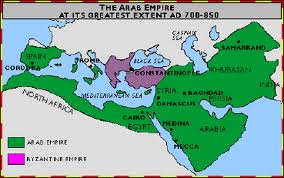
The empire during the Umayyad Dynasty
Islamic Society and Economy
The Islamic law code was known as the Sharia. The Sharia was based off of the Qur'an and the Sunnah. Religious leaders' judgments also made up part of the Sharia.
The Islamic empire had a social class based off of religion. The Arabs were at the top, non-Muslim converts were next, Christians and Jews were after, and slaves were at the bottom.
Trade was very important in Muslim cities. The most famous Islamic products were their textiles. Steel swords and leather goods were also popular products. Merchants were very important in Islamic society and could quickly move up to higher ranks in society. Merchant traded in the souk, the Islamic marketplace.
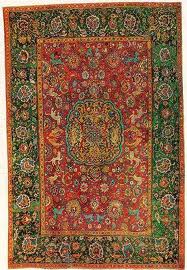
Islamic textile
Achievements
The Islamic empire was very diverse and had all types of people living in it. Learning was greatly prized in the Islamic empire. It also specialized in philosophy, history, architecture, calligraphy, medicine, math, and astronomy. Many history books were written. Ibn Sina, one of the greatest doctors of all time, wrote a very detailed medical encyclopedia. Muslim mathematicians created algebra. Muslim astronomers charted the planets and stars. Overall, the Islamic empire and religion was very successful and thrived.
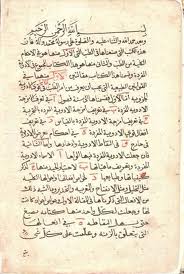
Page from Ibn Sina's medical encyclopedia
