The Rise of Japan
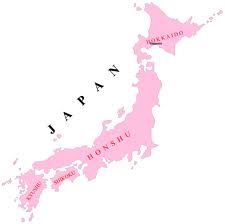
In reality, however, Japan began when people from the mainland Asia traveled to the islands of Japan. Afterwards, they formed clans that were constantly competing for power. Eventually, the Yamato clan gained the most power and took over Japan. A young leader known as Prince Shotoku began to unite Japan. He encouraged Buddhism which would unite Japan if they all followed it, and borrowed a constitution from China. They borrowed many things from other countries.
After Shotoku died, the reforms continued. This series of changes was known as the Taika Reform.
Nara became the capital of Japan. It was set up in a similar manner to the Chinese city of Chang'an. The capital was soon moved to Heian-Kyo, or Kyoto, because Buddhist monks in Nara were becoming too powerful.
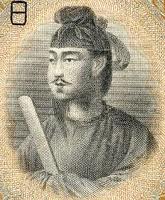
Prince Shotoku
The Battles for Power
The emperor's power eventually began to fade. The Fujiwara family became the main people that were running the country, while the emperor was merely a puppet. However, some clans envied the Fujiwara's power and wanted to take power as well. The two most powerful clans were the Minamoto and the Taira clans. These two clans eventually drove the Fujiwara out of power.
Afterwards, they turned on each other. They fought for a long time, until the Minamoto finally beat the Taira in a large battle at sea. The new ruler was Minamoto Yoritomo. He became Japan's shogun, or main military leader.
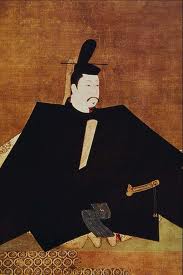
Minamoto Yoritomo
Feudalism emerged during the rule of Minamoto Yoritomo. A daimyo, or land lord, would grant land and rewards to people who provided military service. Peasants would work on the daimyo's lands, and in exchange, the daimyo offered protection through his samurai. Samurai had to follow a strict code of conduct known as bushido.
The Mongol Invasions
During the 1200's, the Mongols demanded tribute from Japan. Japan refused. Therefore, Kublai Khan launched an attack on Japan. However, a fierce storm destroyed the armada and drowned most of the Mongol troops. They sent another even larger attack. After nearly two months of fighting in Japan, a typhoon arose and once again destroyed the armada and drowned the soldiers.
After the attack of the Mongols, the country fell into war. After a long time of violence, the work of three strong leaders: Oda Nobunga, Toyotomi Hideyoshi, and Tokugawa Ieyasu reunited Japan once more. Soon after, the way of the samurai faded away and was replaced with newer forms of government as civilization advanced, putting an end to feudalism and bushido.
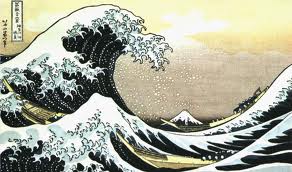
A typhoon: this was the cause for the defeat of the Mongols during their attack on Japan
